React Flow Cosmic Explorer — Build an Interactive Star and Constellation Explorer with React Flow
Pro
About React Flow Cosmic Explorer — Build an Interactive Star and Constellation Explorer with React Flow
Cosmic Explorer transforms the experience into an interactive journey through the night sky. Built with React Flow, this immersive astronomy visualization lets users explore constellations, discover individual stars, follow connected star patterns, and learn interesting facts about the universe—all through a visually engaging interface.
Cosmic Explorer—Build an Interactive Star and Constellation Explorer with React Flow
The night sky is filled with stars, patterns, and celestial stories waiting to be discovered. But exploring astronomy through static charts and reference books can make it difficult to understand how stars connect to form constellations and how different celestial objects relate to one another.
**Cosmic Explorer** transforms the experience into an interactive journey through the night sky.
Built with React Flow, this immersive astronomy visualization lets users explore constellations, discover individual stars, follow connected star patterns, and learn interesting facts about the universe—all through a visually engaging interface.
Whether you're developing an astronomy learning platform, creating an interactive science application, or experimenting with advanced data visualization, Cosmic Explorer provides an inspiring foundation for building space-themed interactive experiences.
Explore the Night Sky Through an Interactive Star Map
Cosmic Explorer brings the beauty of the night sky into a digital environment.
Instead of simply viewing a static astronomical chart, users can explore a visual star map, discover constellations, and select celestial objects to learn more about them.
The experience combines a dark, atmospheric background, luminous stars, constellation connection lines, and contextual information panels to make astronomy exploration more engaging.
The example features seven constellations:
-
**Aquila** — The Eagle, associated with the Greek myth of Zeus's thunderbolt bearer.
-
**Scutum** — The Shield, a small modern constellation introduced by Johannes Hevelius in 1684.
-
**Ophiuchus** — The Serpent Bearer, traditionally associated with the healer Asclepius.
-
**Libra** — The Scales, the zodiac constellation representing an object rather than a creature.
-
**Sagittarius** — The Archer, whose brightest stars form the familiar Teapot asterism.
-
**Scorpius** — The Scorpion, traditionally associated with the story of Orion.
-
**Lupus** — The Wolf, a constellation located near Centaurus and Scorpius.
Each constellation provides a starting point for discovering its associated stars and astronomical characteristics.
Discover the Stories Behind Individual Stars
A constellation is more than a collection of connected points. Individual stars have their own names, characteristics, and scientific stories.
Cosmic Explorer makes this information part of the exploration experience.
For example, users can discover:
-
**Altair (α Aquilae):** A bright, rapidly rotating star in Aquila.
-
**Antares (α Scorpii):** A red supergiant known as the heart of the Scorpion.
-
**Rasalhague (α Ophiuchi):** The brightest star of Ophiuchus.
-
**Nunki (σ Sagittarii):** A hot blue-white star associated with the Teapot's handle.
-
**α Scuti:** The brightest star in Scutum, an orange giant.
The contextual information panel presents details about a selected constellation, including its description, featured stars, coordinates, hemisphere, and best viewing period.
This gives users a more informative experience without requiring them to leave the star map to look up every detail.
Why Choose Cosmic Explorer?
1. Make Astronomy More Interactive
Traditional star charts are useful reference materials, but they offer limited opportunities for exploration.
Cosmic Explorer turns the star chart into an interactive environment where users can discover constellations, follow star connections, and investigate individual celestial objects.
This makes astronomy feel more approachable and encourages users to explore beyond the information they already know.
2. Visualise Constellations and Star Relationships
Understanding a constellation requires recognising how individual stars form a larger pattern.
Cosmic Explorer uses connected star points to represent constellation structures visually.
Users can see how stars relate to one another rather than relying entirely on written descriptions or printed diagrams.
3. Combine Visual Exploration with Useful Information
An attractive visualization becomes much more valuable when it also provides meaningful information.
Cosmic Explorer combines its star-map experience with contextual details about selected constellations.
Users can explore the visual representation while learning about the objects they discover.
4. Create an Immersive Exploration Experience
The interface uses a deep space-inspired visual environment, luminous stars, highlighted constellation lines, and a dedicated information panel.
These design choices create an experience that feels closer to exploring a digital universe than browsing a conventional information dashboard.
5. Give Developers a Creative React Flow Foundation
For developers, Cosmic Explorer demonstrates how React Flow can be used beyond traditional workflow editors.
It provides inspiration for creating visually rich applications where connected elements represent relationships within a larger dataset.
This opens up opportunities for astronomy applications, scientific visualizations, educational platforms, and interactive exploration tools.
Real-World Applications of Cosmic Explorer
Cosmic Explorer is not limited to astronomy enthusiasts. Its visual exploration approach can support several educational, scientific, and digital product experiences.
1. Astronomy Education and Classroom Learning
Teachers can use an interactive constellation explorer to introduce students to stars, constellations, and basic astronomical concepts.
For example, during a lesson about the night sky, students can explore Scorpius, identify Antares, and learn how its surrounding stars form the constellation's distinctive shape.
Instead of relying entirely on textbook illustrations, students can interact with a visual representation of the subject.
**How it makes learning easier:**
-
Makes constellations easier to recognise.
-
Connects individual stars with larger patterns.
-
Provides contextual information during exploration.
-
Encourages curiosity through direct interaction.
2. Digital Planetariums and Science Exhibitions
Planetariums and science museums often need engaging ways to present astronomical information to visitors.
Cosmic Explorer could serve as the foundation for a touchscreen constellation explorer or an interactive educational display.
Visitors could select a constellation, examine its connected stars, and discover interesting facts through an information panel.
**How it makes the experience easier:** Visitors can explore astronomy independently, while exhibition organisers gain a flexible visual format for presenting educational content.
3. Astronomy Websites and Educational Platforms
Educational websites can use interactive star maps to make their astronomy content more engaging.
Instead of presenting every constellation as a separate static image, a website could offer a central exploration interface where visitors discover different constellations and their associated stars.
**How it makes development easier:** Developers can use Cosmic Explorer as a starting point for a more interactive astronomy experience rather than designing the entire visualization concept from scratch.
4. Astronomy Clubs and Stargazing Communities
Astronomy clubs regularly organise observation sessions, introduce beginners to constellations, and share information about visible stars.
A digital constellation explorer can support these activities by providing a visual reference before or during an observation session.
For example, a club could use Sagittarius to introduce the Teapot asterism and explain the positions of its prominent stars.
**How it makes activities easier:** Members can use a shared visual reference to discuss constellation patterns and become more familiar with the night sky.
5. Science Communication and Content Creation
Science educators, bloggers, and astronomy content creators need engaging ways to explain astronomical topics.
Cosmic Explorer can inspire interactive content that combines visual storytelling with contextual scientific information.
For example, an educational article about the Scorpion constellation could include an interactive view of Scorpius, highlighting Antares, Shaula, and other notable stars.
**How it makes content creation easier:** Visual explanations help readers connect names, locations, and relationships without relying exclusively on lengthy written descriptions.
6. Scientific Data Visualization Applications
Astronomy is only one example of a domain where connected visual information can be useful.
The same design approach can inspire applications that display related objects, their relationships, and contextual information.
Developers could adapt the concept for:
-
Satellite and space-object exploration.
-
Scientific knowledge maps.
-
Celestial object catalogues.
-
Educational relationship graphs.
-
Interactive scientific datasets.
**How it helps:** Developers can explore a reusable visual interaction pattern for presenting connected information in a more understandable format.
How Cosmic Explorer Makes Exploration Easier
| Traditional astronomy resources | With Cosmic Explorer |
|---|---|
| Browse static constellation charts | Explore a connected visual star map |
| Search for star information separately | Discover contextual information within the interface |
| Memorise constellation patterns from illustrations | Follow highlighted connections between stars |
| Switch between charts and reference pages | Combine visual exploration and information panels |
| Present astronomy through static content | Create a more engaging interactive experience |
The key advantage is bringing exploration and information together. Users can discover something visually and learn about it within the same experience.
Who Should Use Cosmic Explorer?
**Frontend developers** — Build interactive star maps, connected visualizations, and astronomy-themed web applications.
**EdTech developers** — Create engaging science education experiences for students and teachers.
**Astronomy educators** — Introduce constellations, prominent stars, and astronomical concepts through visual exploration.
**Science communicators** — Present astronomy topics through interactive visual storytelling.
**Planetariums and museums** — Explore ideas for digital astronomy exhibits and interactive displays.
**Astronomy enthusiasts** — Discover constellations and learn more about notable stars.
**SaaS founders** — Use the example as inspiration for building specialized scientific visualization products.
Why Buy Cosmic Explorer from VisualFlow?
Building an immersive star and constellation explorer involves much more than displaying a collection of stars on a dark background.
Developers need to think about visual positioning, connected relationships, interactive selection, contextual information, navigation, and the overall presentation of astronomical data.
Creating a polished experience requires time spent on both the visualization architecture and the user interface.
**Cosmic Explorer gives developers a practical starting point for building interactive astronomy and connected-data visualization applications with React Flow.**
Instead of beginning with an empty canvas, you can explore an existing implementation and adapt its visual approach to your own requirements.
It is particularly valuable if you're:
-
Developing an interactive astronomy application.
-
Building an educational star map.
-
Creating a constellation visualization tool.
-
Designing a scientific data explorer.
-
Building interactive relationship maps.
-
Exploring creative React Flow applications beyond conventional workflow editors.
The real value is the opportunity to learn from an existing visual application and use its implementation as a foundation for your own product.
Build Beyond Traditional Diagrams with VisualFlow
React Flow is capable of supporting more than workflow builders and traditional flowcharts.
Cosmic Explorer demonstrates how connected visual elements can create an entirely different kind of digital experience—one where users explore the universe, discover relationships, and learn through interaction.
Whether you're building an astronomy platform, an educational application, or a creative scientific visualization, this example offers inspiration for turning complex information into an engaging visual experience.
**Explore the stars. Discover the connections. Build something extraordinary with VisualFlow.**
[Explore Cosmic Explorer](https://constellation.visualflow.dev/)
Discover more interactive React Flow examples and development resources at [VisualFlow](https://www.visualflow.dev/).
Related Blueprints
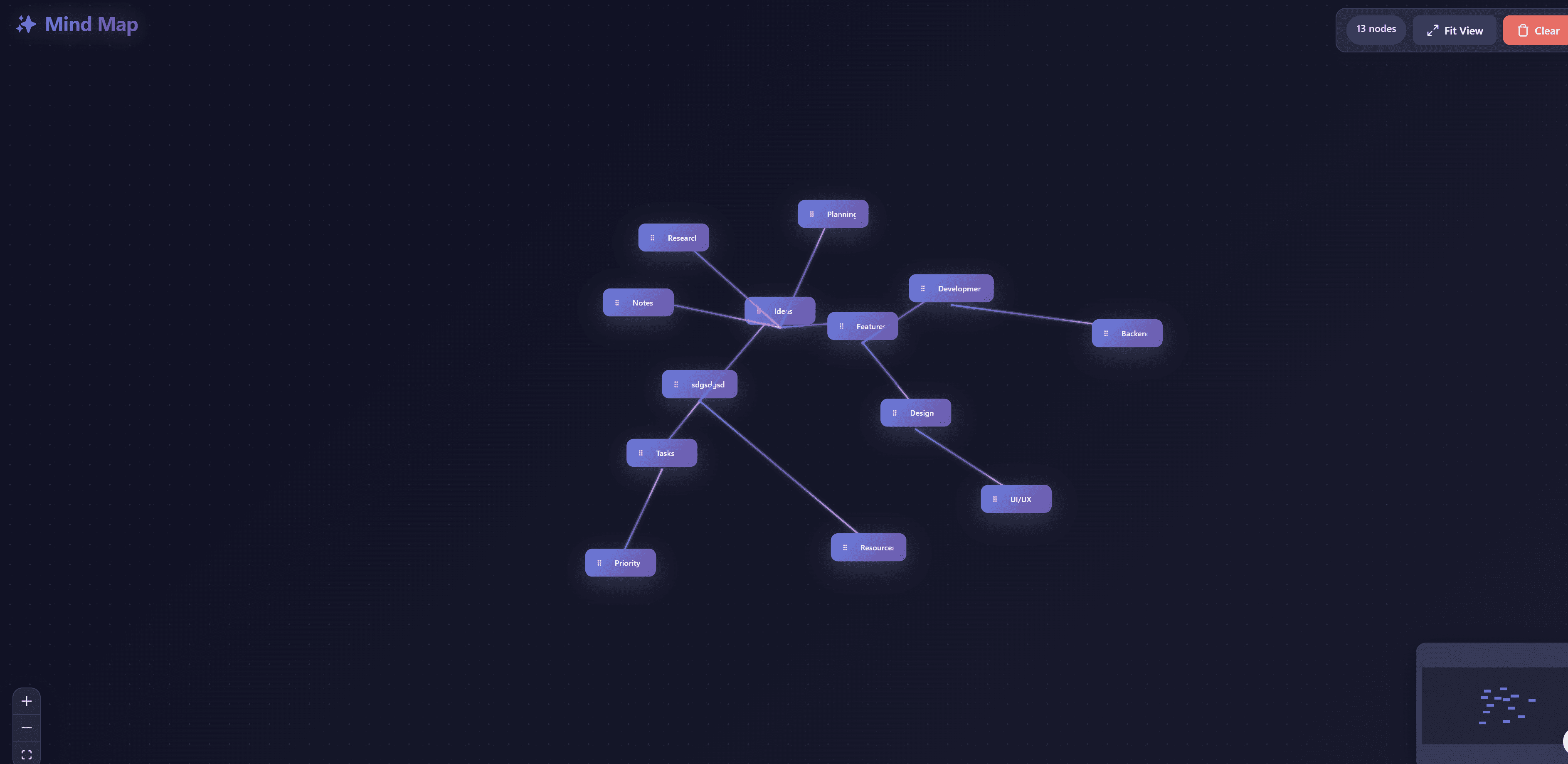
React flow concept map
Interactive concept mapping tool for organizing knowledge and visualizing relationships between ideas. Create hierarchical concept maps with drag-and-drop nodes, custom connections, and rich text editing. Perfect for education, research, brainstorming, and knowledge management with intuitive interface for building complex conceptual relationships.
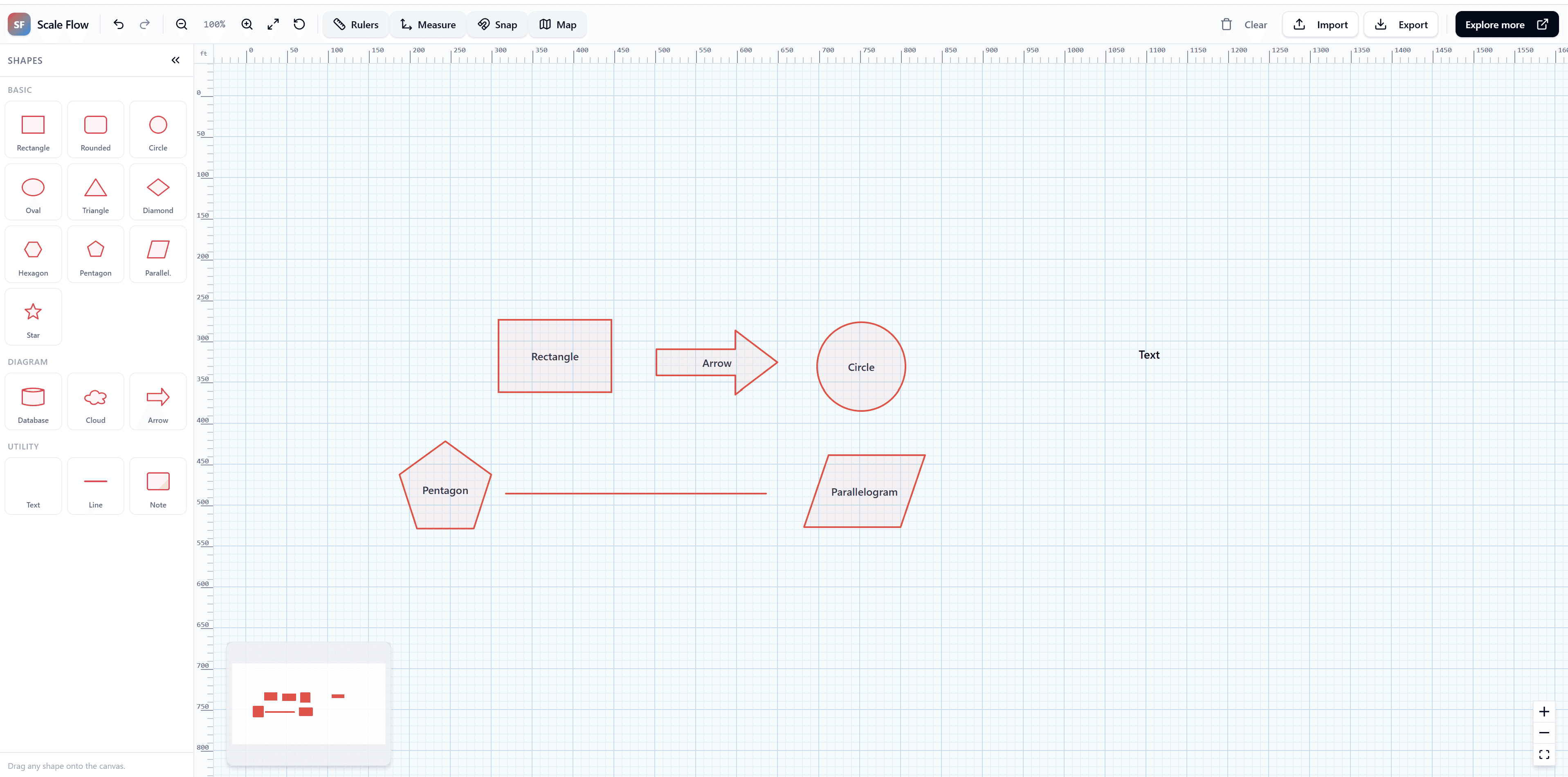
Scale Studio Pro Enterprise with React flow
An enterprise-grade, massive scale diagramming studio built with React Flow. Engineered for performance with thousands of nodes, advanced minimap navigation, and high-fidelity zoom.
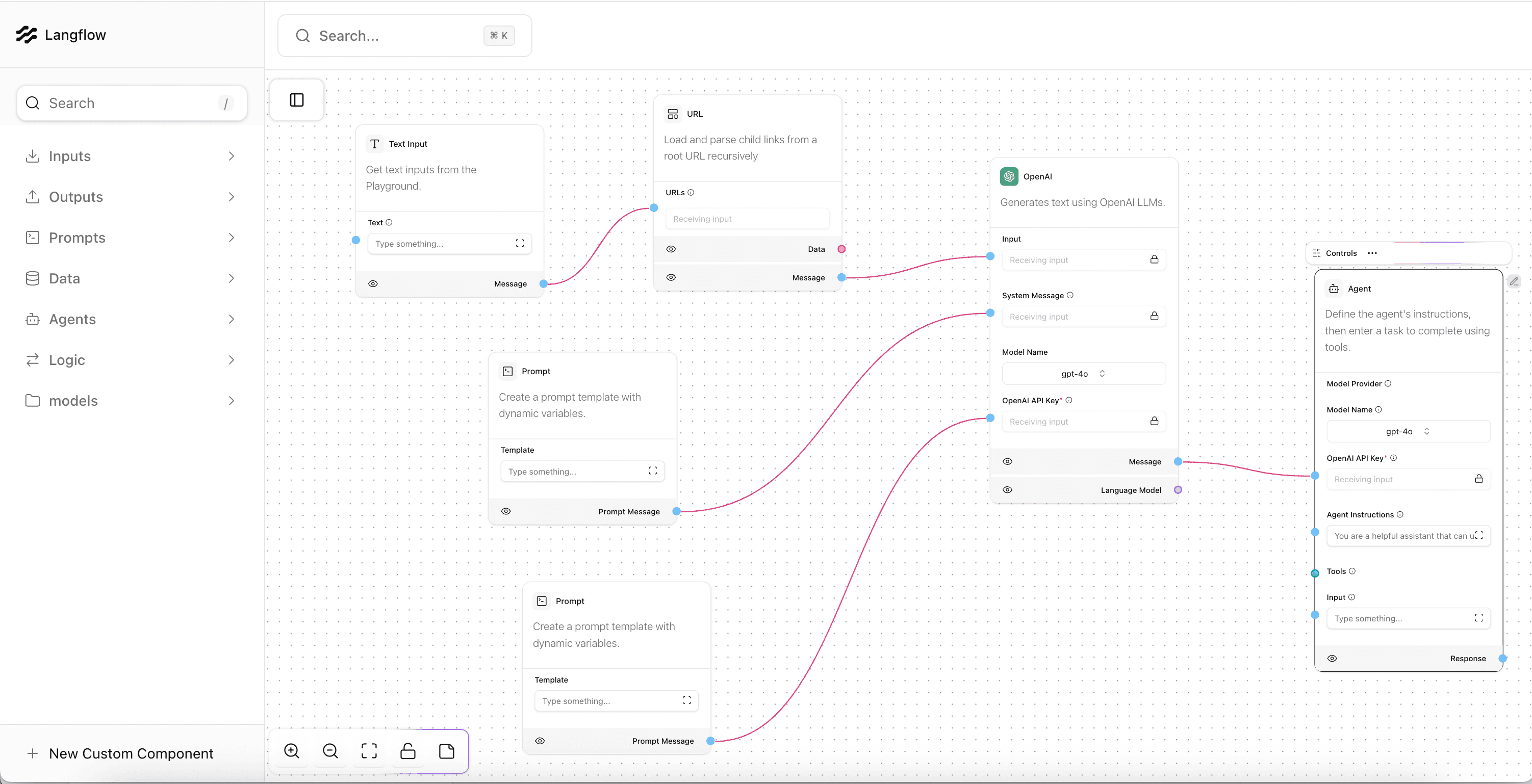
React flow Langflow builder
Langflow is a low-code AI application builder that enables developers to create sophisticated AI workflows, agents, and retrieval-augmented generation (RAG) applications without extensive coding. Build and deploy LLM-powered applications through intuitive visual interface with support for all major large language models, vector databases, and growing library of AI tools. Features prompt templating, model comparison, vector database integration, and production deployment tools for building AI chatbots, content generation systems, and complex reasoning agents.